Introduction
Planning a holiday is exciting until you start wondering who will look after your dog while you are away. For Dubai pet owners, dog boarding vs in-home pet sitting in Dubai is an important decision because the city’s climate, busy lifestyle and availability of professional pet-care services can all affect your dog’s comfort and safety.
Both options can work well, but neither is automatically safer for every dog. A confident, social dog may enjoy a professionally managed boarding facility, while an anxious or elderly dog may be much happier staying in familiar surroundings with a trusted sitter. The right choice depends on your dog’s health, personality, routine and the quality of care available.
Dubai Municipality places significant emphasis on animal health and welfare and oversees veterinary establishments and related animal-care standards. It also provides veterinary services and pet health guidance, making professional veterinary support an important consideration when choosing holiday care.
This guide compares the two options so you can make a practical decision before booking your next holiday.
Dog Boarding vs In-Home Pet Sitting in Dubai: What Is the Difference?
The basic difference is where your dog spends your holiday.
With dog boarding, your pet stays at a dedicated facility for an agreed period. Depending on the provider, the service may include accommodation, feeding, exercise, playtime, grooming and supervision.

With in-home pet sitting, your dog remains at your home while a sitter visits regularly or stays in the property. This can allow your pet to maintain its normal sleeping area, feeding schedule and familiar environment.
When considering dog boarding vs in-home pet sitting in Dubai, do not judge the services only by price. The sitter’s experience, staff-to-dog ratio, emergency procedures, hygiene standards and ability to handle your dog’s individual needs can matter far more.
When Is Dog Boarding the Safer Choice?
A good boarding facility can be an excellent option for dogs that enjoy company, adapt easily to new environments and require regular supervision.
Professional supervision can provide reassurance
One of the main advantages of boarding is that your dog is being cared for within an organised pet-care environment. Depending on the facility, staff may be available for much of the day and may have established procedures for feeding, exercise, cleaning and emergencies.
This can be particularly useful if your dog needs medication or cannot comfortably remain alone for long periods.
However, never assume that every boarding facility offers the same level of supervision. Ask exactly how frequently dogs are checked, whether overnight staff are present and what happens if an animal becomes sick.
Boarding can suit social dogs
Some dogs genuinely enjoy interacting with people and other dogs. For these pets, boarding may provide mental stimulation and structured activity rather than several days of isolation.
The key is controlled socialisation. Dogs should not simply be placed together without consideration of temperament, size, behaviour and individual needs.
Facilities may have established emergency arrangements
A responsible boarding provider should have a clear plan for injuries, illness and other emergencies. Ask whether the facility works with a licensed veterinary clinic and who makes medical decisions if you cannot immediately be reached.
Dubai Municipality regulates and monitors veterinary establishments and publishes technical and health requirements for veterinary facilities.
That does not mean a boarding facility itself is a veterinary hospital, so owners should still ask what veterinary support is actually available.
When Is In-Home Pet Sitting Safer?
For many dogs, staying at home is less stressful than being transported to an unfamiliar environment.
Familiar surroundings can reduce anxiety
Dogs are creatures of habit. Their own bed, smells, toys, feeding area and daily routine can provide a strong sense of security.
If your dog becomes nervous around unfamiliar animals or environments, in-home pet sitting in Dubai may be the more comfortable choice.
This can be particularly valuable for dogs that experience separation-related stress, although the sitter must provide enough companionship. A quick visit once a day may not be sufficient for a dog that normally spends most of the day with its family.
Routine is easier to maintain
A sitter can often follow your existing feeding, walking, medication and sleeping schedule more closely than a busy boarding environment.
This is useful for dogs with strict dietary requirements or established routines.
Before leaving, provide written instructions covering food portions, medications, walking preferences, behaviour triggers, emergency contacts and your veterinarian’s details.
There is less exposure to unfamiliar dogs
Boarding can involve contact with other animals. While reputable facilities use hygiene and screening procedures, close contact can still introduce additional behavioural and infectious-disease considerations.
Keeping your dog at home limits direct contact with unfamiliar animals.
This can be especially attractive for dogs that are reactive, fearful or uncomfortable in group settings.
Dubai’s Climate Makes Holiday Planning More Important
Weather is an important part of the dog boarding vs in-home pet sitting in Dubai decision.
Dubai can experience extreme heat, so exercise and outdoor time need careful management. Dubai Municipality’s pet-care guidance identifies excessive panting, weakness, vomiting, diarrhoea and difficulty standing among possible signs associated with heat emergencies and dehydration, and recommends moving an affected animal to a cool area and seeking appropriate veterinary care.
Ask how outdoor exercise is managed
If you choose boarding, ask when dogs are taken outside and whether walks are scheduled around safer temperatures.
A facility that promises frequent outdoor exercise without explaining its summer heat-management procedures deserves closer scrutiny.
For home sitting, give the sitter clear instructions about outdoor activity. During very hot periods, indoor enrichment and short, carefully timed toilet breaks may be safer than long walks.
Air conditioning matters
For both options, temperature control should be discussed.
At home, confirm that the sitter understands how your air conditioning system works and knows what to do if there is a power or cooling problem.
At a boarding facility, ask whether sleeping and common areas are consistently climate controlled and what contingency arrangements exist if the cooling system fails.
How to Vet a Dog Boarding Facility in Dubai
The safest boarding choice is not necessarily the most expensive facility. Look for evidence of responsible daily care.
Visit before booking
A physical visit can reveal things online reviews cannot. Look at cleanliness, ventilation, sleeping areas, fencing, access control and how staff interact with the animals.
Pay attention to the dogs already staying there. Do they appear relaxed and appropriately supervised, or excessively stressed?
Ask about vaccination and health requirements
Responsible providers may require vaccination records and other health information before accepting a dog.
Dubai Municipality provides recognised vaccination services for pets, including rabies and core vaccines for dogs.
Ask the facility exactly what documentation it requires and keep your dog’s records current.
Understand the emergency plan
Ask practical questions rather than accepting a vague promise that your dog will be safe.
Find out which veterinarian is contacted during an emergency, who transports animals to the clinic, whether staff can administer prescribed medication and how quickly you will be notified.
How to Choose a Safe In-Home Pet Sitter
Choosing someone to enter your home and care for your dog requires just as much attention.
Check experience, references and reliability
Ask how long the sitter has cared for dogs and whether they have handled animals with similar needs.
References can provide useful insight into punctuality, communication and how the sitter responds when something unexpected happens.
For additional guidance, use a detailed Pet Sitter Vetting Checklist when evaluating candidates.
Arrange a meet-and-greet
Never make the first meeting happen on the day you fly.
Let your dog meet the sitter beforehand. Observe whether the interaction appears calm and respectful. A good sitter should be interested in your dog’s behaviour, routine, diet and individual personality rather than simply asking where the food is kept.
Clarify exactly what “pet sitting” means
The phrase can describe very different services.
Some sitters stay overnight. Others visit for 20–60 minutes once or several times a day. Make sure you know how much time the person will actually spend with your dog.
If your dog is highly social or becomes distressed when left alone, occasional visits may not provide enough companionship.
Dog Boarding vs In-Home Pet Sitting in Dubai: Which Is Better for Different Dogs?
There is no universal winner in the dog boarding vs in-home pet sitting in Dubai debate.
A young, healthy and highly social dog that enjoys new environments may thrive in a well-run boarding facility. The structured environment and human interaction can make boarding enjoyable rather than stressful.
An older dog, nervous dog or pet with strong attachment to its home may benefit more from in-home sitting. Staying in familiar surroundings can minimise environmental changes while allowing the sitter to maintain the dog’s usual routine.
Dogs requiring medication or specialised care should be assessed individually. In some cases, professional veterinary boarding or a sitter with appropriate experience may be preferable to ordinary boarding.
The most important question is not simply, “Which service is safer?” Instead ask, “Which environment allows my particular dog to receive consistent, appropriate and attentive care?”
What About Grooming Before or During Your Holiday?
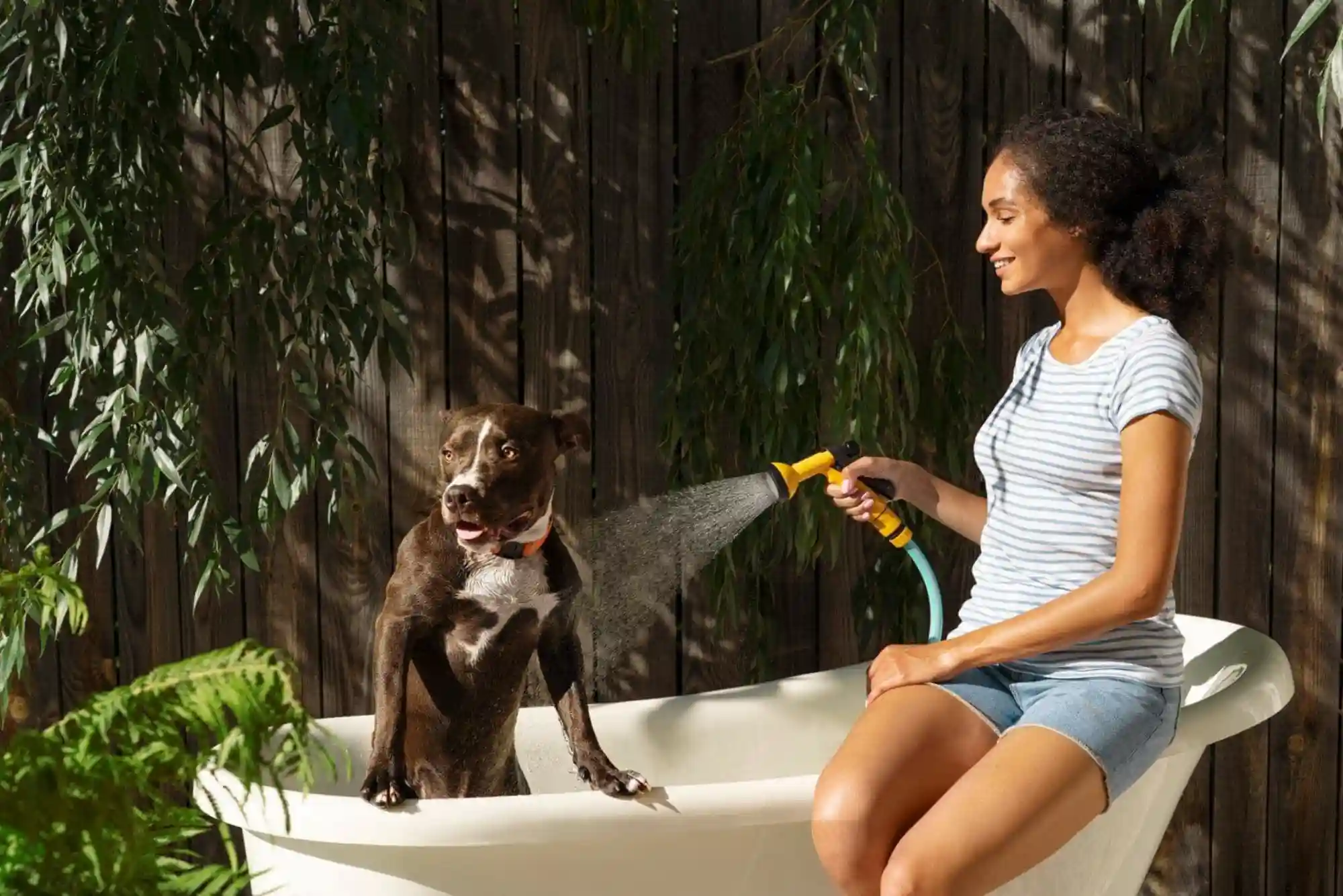
Grooming can also form part of your holiday preparation. A clean, well-maintained coat can make your dog more comfortable, particularly if your pet has a coat that requires regular brushing.
For owners looking for broader UAE Pet Services, mobile grooming can be convenient because the service comes to your home instead of requiring another trip for your pet.
Avoid making major grooming changes immediately before travelling, particularly if your dog has sensitive skin. Stick with familiar products and routines whenever possible.
Questions to Ask Before Leaving Your Dog
Before confirming either service, discuss your dog’s complete care plan.
Ask who will feed your dog, how exercise will be managed, how often your pet will be checked, what happens during an emergency, whether unfamiliar dogs will be introduced, and how you will receive updates.
It is also wise to leave written veterinary information and authorisation instructions. Dubai Municipality maintains veterinary services and regulates veterinary establishments, so knowing where professional veterinary help can be obtained is an important part of your emergency planning.
You can also explore Rankti for additional pet-service information and resources.
Common Mistakes Dubai Dog Owners Should Avoid
One common mistake is choosing a service solely because it is inexpensive. Holiday pet care involves responsibility, and extremely low prices may mean fewer visits, less supervision or limited experience.
Another mistake is booking at the last minute. Good sitters and reputable boarding facilities can become unavailable during peak holiday periods.
Owners should also avoid changing their dog’s food immediately before departure, failing to provide emergency contacts or assuming that a sitter knows the dog’s routine without written instructions.
Most importantly, never hide behavioural or medical information. A caregiver can only keep your dog safe if they know what to expect.
Choosing the Safest Holiday Care for Your Dog
When comparing dog boarding vs in-home pet sitting in Dubai, safety comes down to the quality of care and your dog’s individual needs rather than the service name.
Boarding can be an excellent choice for social dogs when the facility is clean, secure, well supervised and prepared for emergencies. In-home pet sitting can be safer and less stressful for dogs that prefer familiar surroundings, have anxiety around other animals or need a consistent home routine.
Dubai’s climate adds another consideration. Whichever option you choose, make sure your dog’s caregiver understands heat risks, hydration, appropriate exercise times and the signs that veterinary help may be required.
FAQs
Is it better to board a dog or leave it at home?
It depends on the dog’s personality and needs. Confident, social dogs may enjoy boarding, while anxious or routine-oriented dogs often do better at home with a reliable sitter.
Is it stressful for dogs to stay in boarding kennels?
It can be. Some dogs adapt quickly, while others become anxious because of unfamiliar surroundings, noises, people or other animals. A trial overnight stay can help you assess how your dog responds.
Is a pet sitter better than boarding?
A pet sitter can be better for dogs that are comfortable at home and dislike unfamiliar environments. Boarding can be better for dogs that need frequent supervision and enjoy a structured social environment.
How long can a dog be left alone in Dubai?
There is no single safe duration for every dog. Age, health, toilet needs, temperament and routine all matter. During hot weather, owners should be especially cautious about leaving pets without adequate cooling, water and supervision.
What should I look for in a dog boarding facility?
Look for clean and secure premises, suitable supervision, clear health requirements, controlled dog interactions, climate control, emergency procedures and access to veterinary support.
How do I prepare my dog for a pet sitter?
Arrange a meet-and-greet, provide written feeding and medication instructions, explain behavioural triggers, leave veterinary contact information and introduce the sitter to your dog’s normal routine before your departure.
Related Reading: Best Dog Beaches in the UAE: Where Can Dogs Swim Legally in Dubai & RAK?
Related Reading: Top 10 Dog-Friendly Cafes and Outdoor Restaurants in Dubai
Related Reading: How to Relocate Your Dog or Cat to Dubai: UAE Import Permit GuideBlog, Pet Relocation — full guide
Related Reading: How to Keep Indoor Cats Entertained in Dubai High-Rise Apartments
Related Reading: Which Company Provides the Best Luxury Airport Transfer in Dubai?
Related Reading: Top Rated Mobile Pet Grooming Vans in Dubai and Sharjah