Introduction
Relocating your beloved pet from the UK or Europe to the United Arab Emirates requires careful planning. The UAE Ministry of Climate Change and Environment enforces strict animal import protocols to guarantee public safety and animal welfare. Navigating requirements like rabies titer blood tests, ISO microchips, official health certificates, and International Air Transport Association compliant crates can feel overwhelming. Every detail must align perfectly with local regulations and airline policies before your pet boards. Working closely with your veterinarian ensures all treatments and tests follow exact timelines. This complete guide walks you through every requirement to ensure your pet enjoys a safe, seamless, and stress-free journey to their new desert home.
Understanding UAE Ministry of Climate Change and Environment Rules
The UAE Ministry of Climate Change and Environment regulates all animal entries into Dubai, Abu Dhabi, and other emirates. Every pet entering the country must travel as manifest cargo under an official airway bill, meaning pets cannot travel in-cabin or as checked baggage on most commercial routes into the UAE. Each individual is permitted to import up to two pets per calendar year.
Your pet must be at least fifteen weeks old at the time of entry. This age restriction guarantees that young animals have received their full set of primary vaccinations and built necessary immunity. Furthermore, the UAE maintains strict breed-specific legislation that restricts certain breeds from entering the country. Banned breeds generally include Pit Bull Terriers, American Staffordshire Terriers, Japanese Tosa, Dogo Argentino, Fila Brasileiro, and Rottweilers, along with any crossbreeds of these dogs. Checking the current banned breed list before booking any transport saves you from heart-wrenching delays or rejected entry at customs.
Microchip and Primary Vaccination Timelines
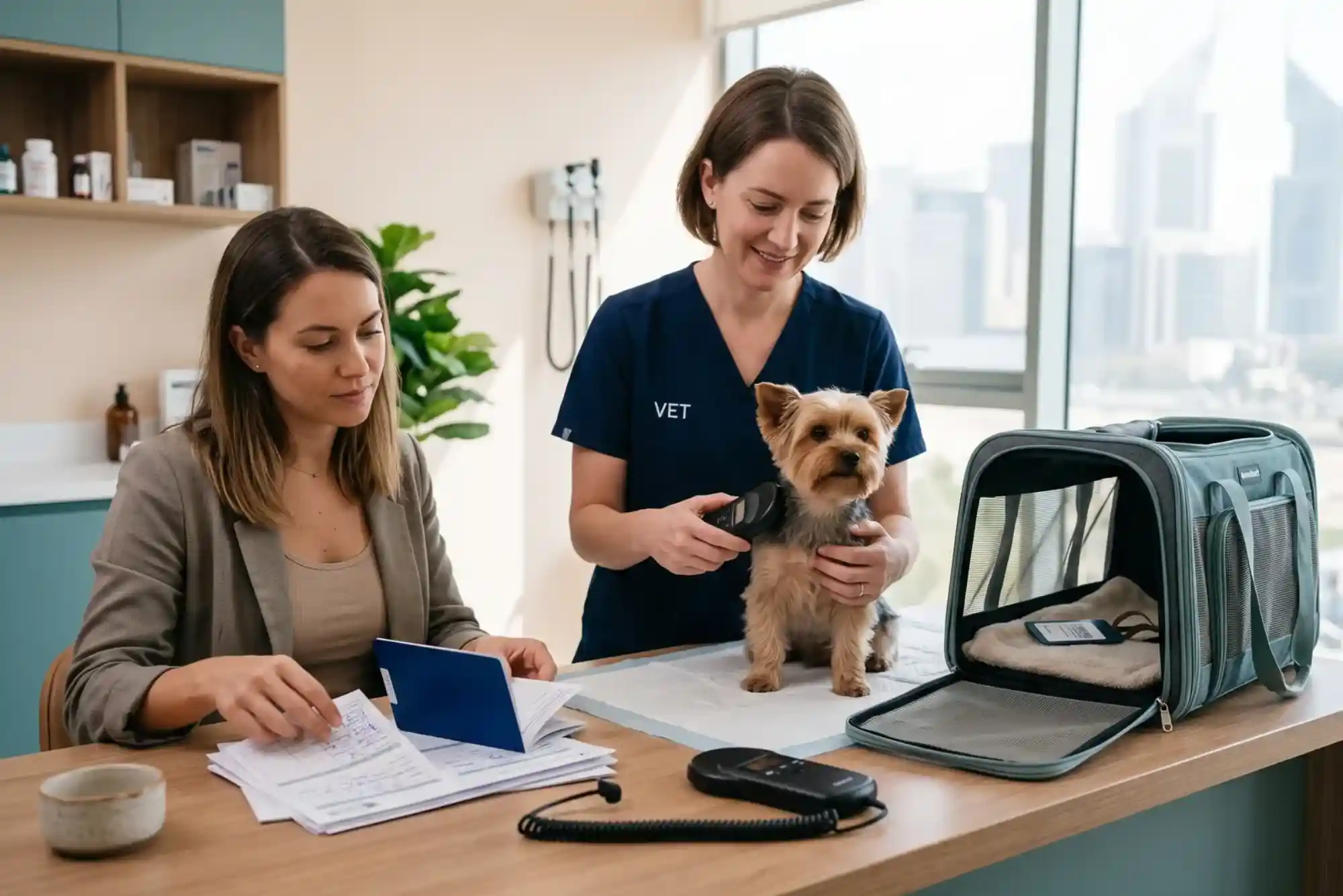
The cornerstone of international pet relocation is permanent identification via a microchip. Your pet must be implanted with an ISO 11784 or ISO 11785 compliant 15-digit microchip. This microchip must be scanned and read prior to any medical procedure, treatment, or vaccination. If a vaccination is given before the microchip is implanted, foreign border control authorities consider that vaccination legally invalid, forcing you to restart the entire sequence.
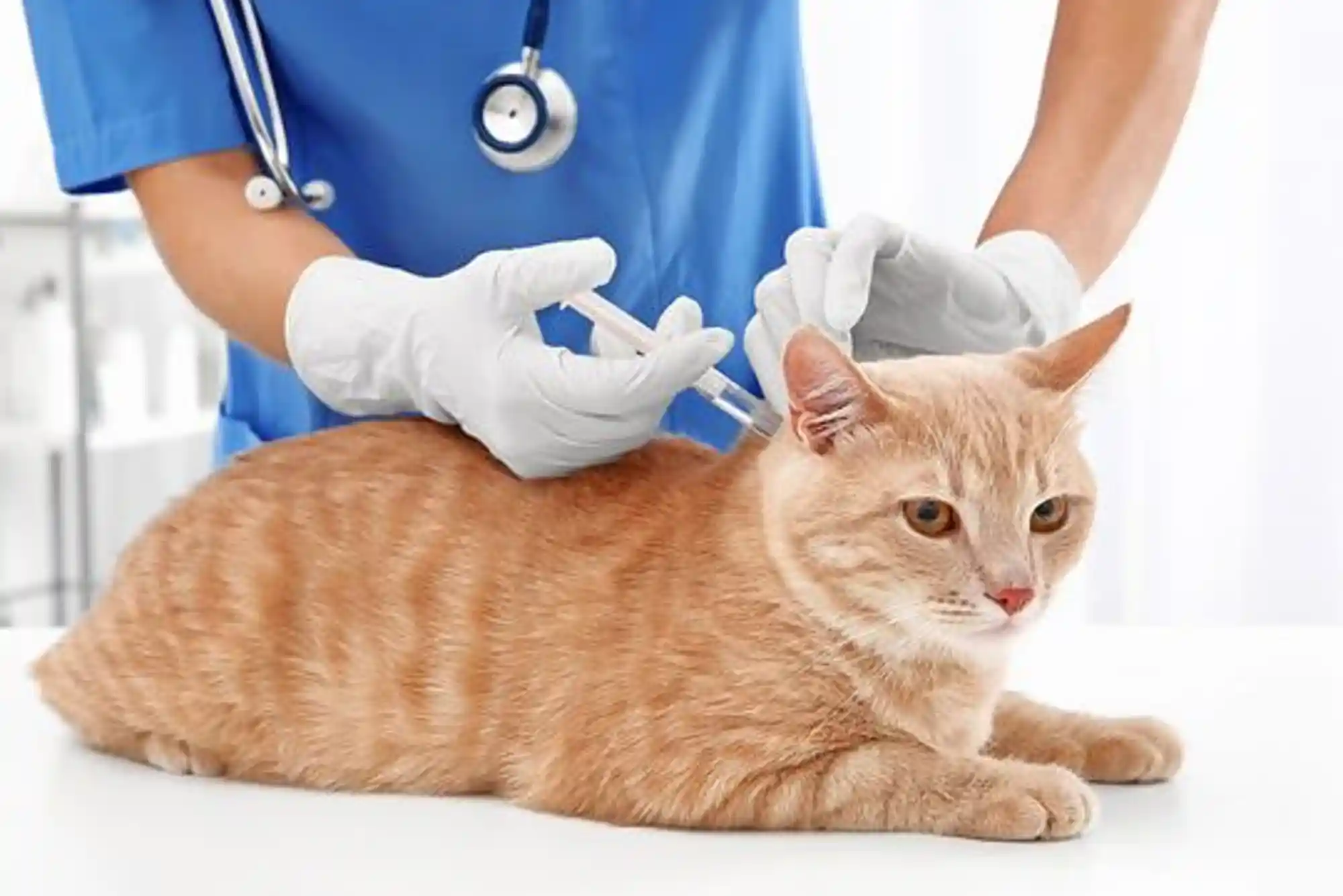
Once the microchip is successfully recorded, your pet must receive a valid rabies vaccination. Dogs must also be vaccinated against core canine diseases, including Distemper, Infectious Hepatitis, Parvovirus, and Parainfluenza. Leptospirosis vaccination is also required for dogs entering the UAE. Cats require core feline vaccinations covering Feline Viral Rhinotracheitis, Calicivirus, and Panleukopenia. All core vaccines must be administered at least twenty-one days before travel and remain valid for the duration of the journey.
Rabies Neutralizing Antibody Titre Blood Tests Explained
The Rabies Neutralizing Antibody Titre test, often called the RNATT or rabies blood test, verifies that your pet’s body has built sufficient antibodies following their rabies vaccination. The blood sample must be collected by an accredited veterinarian at least thirty days after the rabies vaccine was administered.

The blood sample must be shipped to an officially approved EU laboratory for processing. The test result must show a rabies antibody level of at least 0.5 International Units per milliliter to satisfy border authorities. When moving from low-risk listed countries across the UK or European Union, pets can enter the UAE as soon as the passing lab certificate is issued, provided all other paperwork is finalized. Keep the original laboratory report with your pet’s official travel documentation, as customs agents check this upon arrival.
Selecting IATA Approved Airline Crates for Dogs and Cats
Airlines strictly enforce International Air Transport Association Live Animals Regulations regarding transport crates. Purchasing the wrong container size or type is the single most common reason pets are denied boarding at airport cargo terminals. An airline-approved crate must feature a rigid outer shell made of heavy-duty hard plastic, wood, or metal. Foldable crates, fabric bags, soft mesh carriers, and containers with top-opening doors or plastic side latches are completely forbidden for cargo travel. The crate door must be made of strong metal mesh that locks securely using a central locking system. Fasteners holding the top and bottom halves of plastic crates together must use metal nuts and bolts. Plastic clip latches alone are rejected by cargo handlers.
Proper sizing ensures your pet travels comfortably and safely throughout the long flight. Airline guidelines require that your pet can stand fully upright with their head held high without touching the ceiling of the crate. For dogs, measuring to the tips of their ears or head—whichever is taller—is mandatory. Your pet must also be able to turn around completely in a natural standing position and lie down flat in an uncompressed position.
Import Permits, Health Certificates, and Parasite Treatments
Securing official documentation from government authorities is the final critical step before departure. You must apply online for a Ministry of Climate Change and Environment pet import permit through the official government portal. This permit remains valid for thirty days from its issue date, so timing your application close to your travel window is vital.
Within fourteen days of your departure date, an official government-authorized veterinarian in the UK or your specific European country must examine your pet. During this visit, your pet must receive parasite treatments. Internal parasite treatment requires a medication containing Praziquantel to target tapeworms. External parasite treatment requires an approved veterinary spot-on or spray treatment targeting fleas and ticks.
The veterinarian then issues an official Export Health Certificate that details your pet’s microchip number, vaccination history, rabies blood test results, and parasite treatments. In the UK, this document is signed by an Official Veterinarian and endorsed by the Department for Environment, Food & Rural Affairs. In European countries, the certificate is issued by state veterinary officers. This health endorsement confirms your pet is completely fit to travel and free from contagious diseases.
Preparing Your Pet for the Flight and Arrival Clearance
Acclimating your pet to their travel crate well before the flight reduces anxiety dramatically. Place the crate in a familiar room several weeks prior to departure with the door open. Place favorite treats, meals, and soft bedding inside so your pet views the enclosure as a safe, peaceful den. Practice short crate sessions so your pet becomes accustomed to being enclosed comfortably. Direct flights offered by top carriers like Emirates, Etihad Airways, or British Airways provide the safest transport options from UK and European hubs. Cargo holds on these modern commercial aircraft are climate-controlled, pressurized, and lit, matching the environmental conditions of the passenger cabin.
Sedating or tranquilizing pets for air travel is strictly advised against by veterinarians and banned by airlines. Sedatives affect a pet’s natural balance, lower blood pressure, and increase respiratory risks at high altitudes. Natural calming sprays or familiar scents placed near the crate offer safe alternatives to help manage travel anxiety.
Upon landing in Dubai or Abu Dhabi, your pet is transported directly to a dedicated animal cargo facility. Ministry veterinarians inspect the animal, verify microchip numbers, and review original paperwork. Once customs clearance is granted and fees are paid, you or your appointed pet relocation agent can collect your pet. Offering fresh water and a gentle walk right after collection helps your pet settle quickly after their journey.
Frequently Asked Questions
How far in advance should I start planning my pet’s move to the UAE?
You should begin the relocation process at least three to four months before your intended travel date. This timeline allows sufficient time for microchipping, rabies vaccinations, the thirty-day waiting period before the blood test, laboratory processing, and import permit approvals.
Can my pet fly in the cabin with me from Europe to Dubai?
Most commercial flights traveling from the UK and Europe into the UAE do not allow pets in the passenger cabin. UAE import regulations require pets to arrive as manifest cargo under an official airway bill to ensure proper customs and veterinary checks at cargo terminals.
What happens if my pet’s crate is slightly too small at airport check-in?
Airline cargo handlers strictly inspect crate dimensions during acceptance checks. If your pet’s head or ears touch the top of the crate, or if the animal cannot turn around naturally, the airline will reject the crate, and your pet will not be allowed to board the flight.
Are snub-nosed dog and cat breeds allowed to fly to the UAE?
Brachycephalic breeds like Bulldogs, Pugs, Persian cats, and Boxers face heavy transport restrictions due to respiratory risks during air travel. Many airlines ban snub-nosed breeds entirely or restrict their travel to specific weather windows when temperatures remain low.
Do pets have to undergo mandatory quarantine upon arrival in the UAE?
The UAE does not require mandatory quarantine for healthy pets arriving from the UK or Europe, provided all import permits, microchips, vaccinations, rabies blood tests, and health certificates are fully compliant upon landing.